When an aquarium stand fails, thousands of dollars of water damage can occur in a matter of minutes. The immediate priority is stopping the water flow and drying the space to prevent structural rot and mold. From an insurance standpoint, a baseline homeowners (HO-3) or renters (HO-4) policy generally covers sudden and accidental water discharge. However, this coverage is highly specific. While the resulting water damage to floors and walls is usually covered, the failed stand, the tank itself, and the living organisms inside are typically excluded. Understanding these distinctions and knowing how to document the loss is essential for navigating the claims process successfully.
Will Insurance Pay for Ruined Flooring and Drywall?
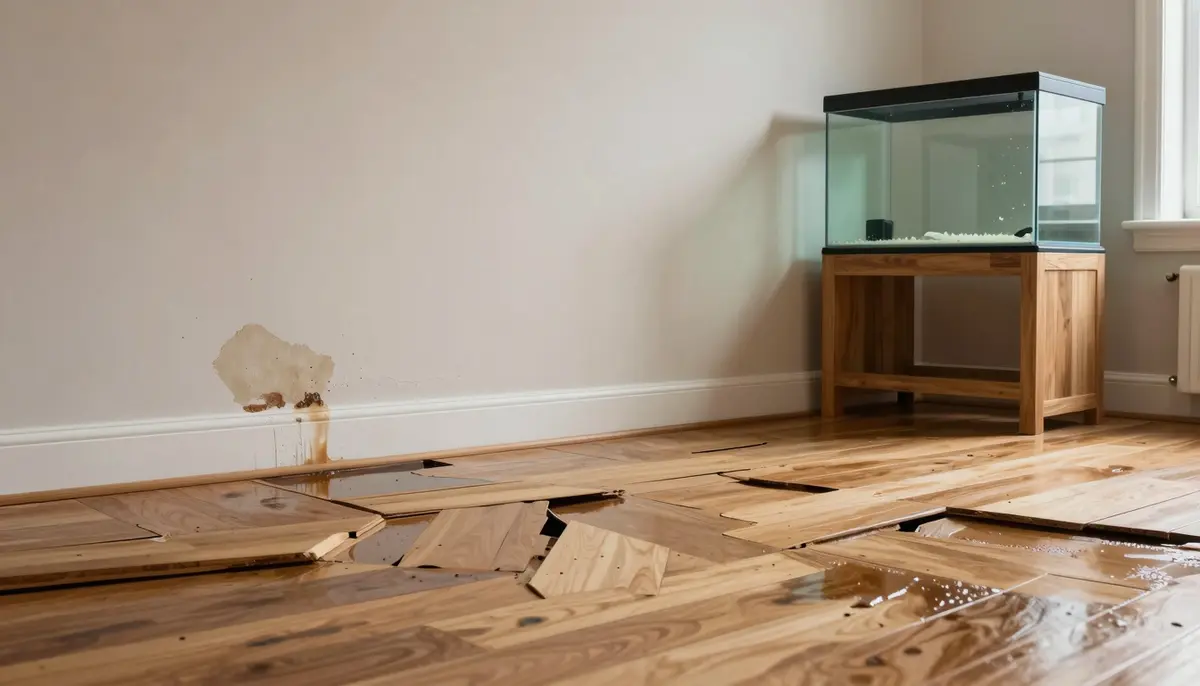
Property insurance policies do not treat aquarium failures as a single, unified claim. Instead, basic insurance forms divide the resulting damage into distinct coverage categories, each governed by different terms, perils, and exclusions.
Understanding Dwelling and Structure Protection
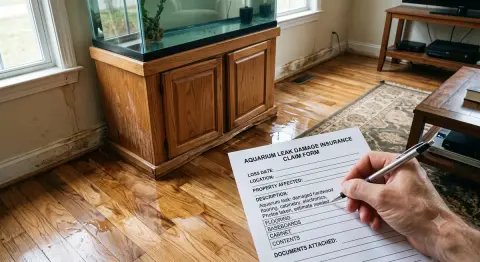
For homeowners utilizing a standard HO-3 form, the dwelling and attached structures are covered on an "open perils" basis. This means any cause of loss is covered unless the policy explicitly excludes it. Open-peril policies offer broad protection. If a structural failure of an aquarium stand causes the tank to rupture and flood a living room, the resulting damage to the hardwood flooring, drywall, and subflooring is generally covered. Because these forms cover any physical loss not explicitly excluded, the burden of proof rests on the insurance company to find a specific exclusion, such as neglect or wear and tear, to deny a claim for structural water damage.
Conversely, if the policyholder is using a named-perils policy, such as an HO-8 form, coverage for aquarium equipment and livestock damage gaps only applies if the water damage directly relates to one of the specifically listed perils. If accidental discharge of water is not explicitly listed in the policy—especially when navigating water damage liability to downstairs neighbors, the structural repairs may not be covered at all.
Why Your Fish, Coral, and the Stand Itself Are Excluded
Under basic HO-3, HO-4 (Renters), and HO-6 (Condominium) policies, personal property is covered on a "named perils" basis. To secure coverage for damaged furniture, electronics, or carpets, the policyholder must prove the damage was caused by one of the 16 named perils listed in the policy package.
Basic policies include "Accidental Discharge or Overflow of Water or Steam" from within a plumbing, heating, air conditioning, or automatic fire protective sprinkler system, or from within a household appliance. Insurance carriers generally classify an aquarium as a household appliance for the purposes of this peril. This classification allows for the coverage of damaged personal property surrounding the tank, but significant coverage gaps remain for the aquarium setup itself.
- The Aquarium and Stand: The failed stand and the shattered tank are often excluded from coverage. If the stand failed due to a manufacturing defect or age, the insurer will not pay to replace the stand itself, though they may rely on large aquarium leak insurance coverage to pay for the resulting water damage to the surrounding room.
- Aquatic Life and Vegetation: Basic personal property provisions explicitly exclude animals, birds, or fish. Livestock, rare corals, and specialized aquatic plants are not covered under standard Coverage C. Protection for high-value marine life requires a specialized scheduled personal property endorsement or a commercial inland marine floater.
To help visualize how different components of an aquarium loss are valued and where coverage gaps exist, review the following breakdown of a typical claim scenario.
| Property Category | Typical Valuation Method | Typical Sublimits & Deductibles | Claim Implication & Coverage Gaps |
|---|---|---|---|
| Structural Flooring & Drywall (Coverage A) | Replacement Cost Value (RCV) | Subject to standard policy deductible; no specific sublimit. | Covered under open-perils forms. Excludes gradual mold or rot if mitigation is delayed. |
| Standard Aquarium Equipment (Pumps, Lights) | Actual Cash Value (ACV) unless RCV endorsement is purchased. | Subject to standard personal property limits. | Depreciation is applied based on the age of the equipment. Receipts are required. |
| Exotic Livestock (Corals, Marine Fish) | Not covered under basic forms. | $0 (Explicitly excluded under basic Coverage C animal exclusions). | Requires a specialized specialty pet or commercial agricultural floater. |
| Media & Home Office Storage (Hard Drives) | Actual Cash Value (ACV) of the physical media. | Subject to standard personal property limits; business property sublimits may apply ($2,500). | Does not cover data restoration. If water-damaged media containing sensitive data is disposed of or replaced, policyholders should follow proper media sanitization protocols (such as physical destruction or cryptographic erasure) and maintain verification logs to prevent data exposure, in accordance with NIST SP 800-88 Rev 1 [SOURCE ID: NIST-01]. |
How Insurers Distinguish Sudden Collapse from Gradual Wear
The primary point of contention in aquarium-related water claims is the distinction between a sudden, catastrophic structural failure and long-term, gradual wear. Insurance policies are designed to protect against fortuitous, sudden events—not predictable maintenance issues.
Gradual Deterioration and Humidity Damage
Aquarium stands, particularly those constructed from medium-density fiberboard (MDF) or particleboard, are highly susceptible to water damage from minor splashes, salt creep, and condensation. Over months or years, moisture slowly penetrates the outer laminate. This slow absorption causes the wood fibers to swell, delaminate, and lose structural integrity. Eventually, the weakened material can no longer support the massive weight of the tank, leading to a catastrophic collapse.
If an adjuster finds evidence of pre-existing wood rot, rusted structural brackets, or a slow, long-term leak that preceded the final collapse, the carrier may deny the entire claim under the "wear and tear" or "continuous or repeated seepage or leakage" exclusions. Policyholders must demonstrate that the failure was not the result of ongoing, unaddressed leakage.
Related Posts
Sudden and Catastrophic Failure
To qualify for coverage, the failure must be sudden. An example is a structural weld on a powder-coated steel stand shearing instantly, or a load-bearing vertical support buckling without warning under a properly rated load. When documenting the loss, the policyholder must establish that the failure was an immediate event rather than the culmination of visible, unaddressed structural decay.
Independent adjusters are tasked with verifying the cause of loss and evaluating the scope of damage. However, their assessment is not always the final word. If a dispute arises regarding whether the failure was sudden or gradual, policyholders have the right to provide documentation, counter-estimates, and expert appraisals to support their claim and challenge a denial [SOURCE ID: III-03].
Step-by-Step Emergency Action and Claims Documentation Protocol
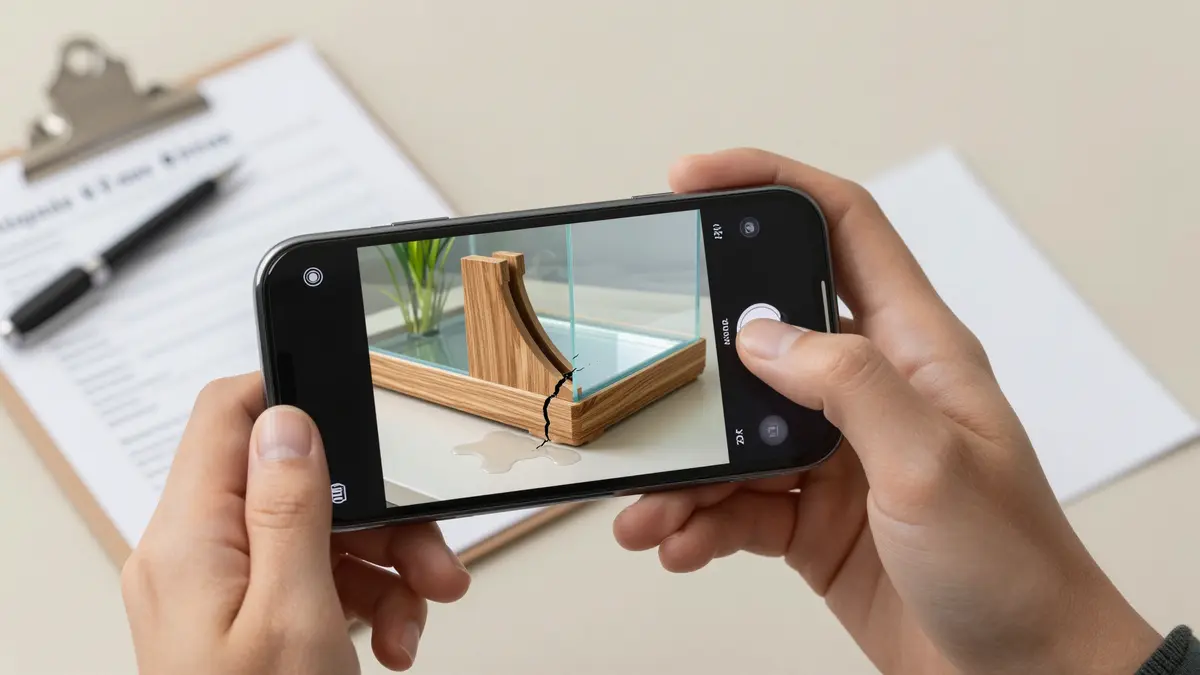
To secure a fair settlement, policyholders must present objective, verifiable evidence to the insurance adjuster. Independent adjusters verify the cause of loss and evaluate the scope of damage based on the physical and documentary evidence provided [SOURCE ID: III-03]. Following a structured protocol immediately after a failure is essential.
- Mitigate Damage Immediately: Take immediate action to stop the water flow and protect remaining property from further damage. Turn off electrical breakers powering the aquarium system to prevent electrical fires and shock hazards. Use wet vacuums to extract standing water. Do not discard the failed stand, the broken aquarium glass, or any damaged equipment. The insurance adjuster must inspect these items to verify the cause of the failure.
-
Establish the Structural Baseline:
Gather documentation regarding the aquarium system's specifications.
- Locate the original purchase receipts for the stand and tank.
- Document the manufacturer, model number, and maximum weight capacity of the stand.
- Calculate the operating weight of the system. A standard 120-gallon glass aquarium weighs approximately 150 pounds empty. When filled with water (8.34 pounds per gallon), substrate, and rock work, the total load exceeds 1,300 pounds. Proving the stand was rated for this load refutes allegations of negligent overloading.
-
Execute High-Resolution Photographic and Video Documentation:
Before beginning extensive cleanup, capture comprehensive visual evidence.
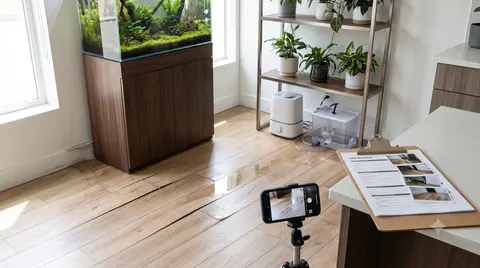
- Photograph the failed stand from multiple angles, focusing closely on the specific joint, fastener, or support leg that failed.
- Capture clear images of the manufacturer's label, serial numbers, and weight-rating stamps.
- Document the path of the water. Photograph watermarks on drywall, saturated carpeting, swollen baseboards, and warped subflooring.
- Take close-up photos of all damaged personal property, including model numbers and serial numbers of wet electronics, pumps, and filtration systems.
-
Retain Professional Restoration and Dry-Out Records:
Basic policy conditions require the policyholder to prevent secondary damage, such as mold growth. Hire an IICRC-certified (Institute of Inspection, Cleaning and Restoration Certification) water damage restoration contractor.
Ensure they provide:
- Daily moisture logs tracking the relative humidity and moisture content of the affected structural materials.
- An inventory of drying equipment used (dehumidifiers, air movers).
- A detailed, itemized invoice separating mitigation labor from structural repair estimates. If a dispute arises regarding the scope of repairs, the policyholder has the right to present these counter-estimates and expert appraisals to the insurer [SOURCE ID: III-03].
- Address Damaged Media and Sensitive Electronics: If the water discharge floods a home office, damaging external hard drives, servers, or local backup drives, standard disposal is often a security risk. If these devices contain sensitive personal, financial, or business data, follow established media sanitization guidelines, such as those outlined in NIST Special Publication 800-88 Revision 1 [SOURCE ID: NIST-01]. Determine whether physical destruction or cryptographic erasure is appropriate for the damaged media, and maintain a formal verification log of the sanitized components to present to underwriters or compliance officers if business records were compromised.
Structural and Underwriting Safeguards to Prevent Claims Disputes
To minimize the risk of a claim denial, policyholders should proactively address maintenance and installation questions that adjusters frequently raise during investigations.
Assembly and Installation Records
If the aquarium stand was sold as a flat-pack kit requiring home assembly, the insurer may investigate whether the stand was assembled correctly. Retain the original assembly manual. If professional installation services were used, keep the service invoice. This documentation helps demonstrate that the stand was built and installed according to manufacturer specifications, shifting potential liability away from user error.
Structural Support Inspections
Large aquariums place highly concentrated point loads on residential flooring. A 180-gallon aquarium can weigh over 2,000 pounds, equivalent to a mid-sized vehicle parked in a living room. Before installing large systems, policyholders should consult a structural engineer to verify that the floor joists can support the load without excessive deflection. Retaining a copy of this engineering report provides strong evidence against claims of negligent installation or structural overloading.
Policyholder Compliance & Verification Checklist
- Verify Policy Peril Definitions: Confirm with a licensed agent whether your policy's "accidental discharge" clause covers aquariums as household appliances.
- Review Mold Sublimits: Check your policy declarations page for specific sublimits regarding mold remediation resulting from water discharge.
- Document Weight Capacity: Keep a digital copy of the stand's manufacturer specifications showing its rated load capacity.
- Maintain Mitigation Logs: Ensure your restoration contractor provides daily moisture readings and equipment logs to justify dry-out expenses and support your claim in a dispute [SOURCE ID: III-03].
- Secure Data Storage: If home office storage media is water-damaged, document the sanitization or destruction process using verified verification logs in accordance with NIST SP 800-88 Rev 1 [SOURCE ID: NIST-01].
Navigating an aquarium stand failure requires quick action and meticulous record-keeping. By understanding the boundaries of your dwelling and personal property coverage, documenting the physical failure immediately, and maintaining professional restoration logs, you can present a clear, evidence-backed claim to your insurer. Taking these steps helps ensure that structural repairs are covered and minimizes the risk of unexpected out-of-pocket expenses.