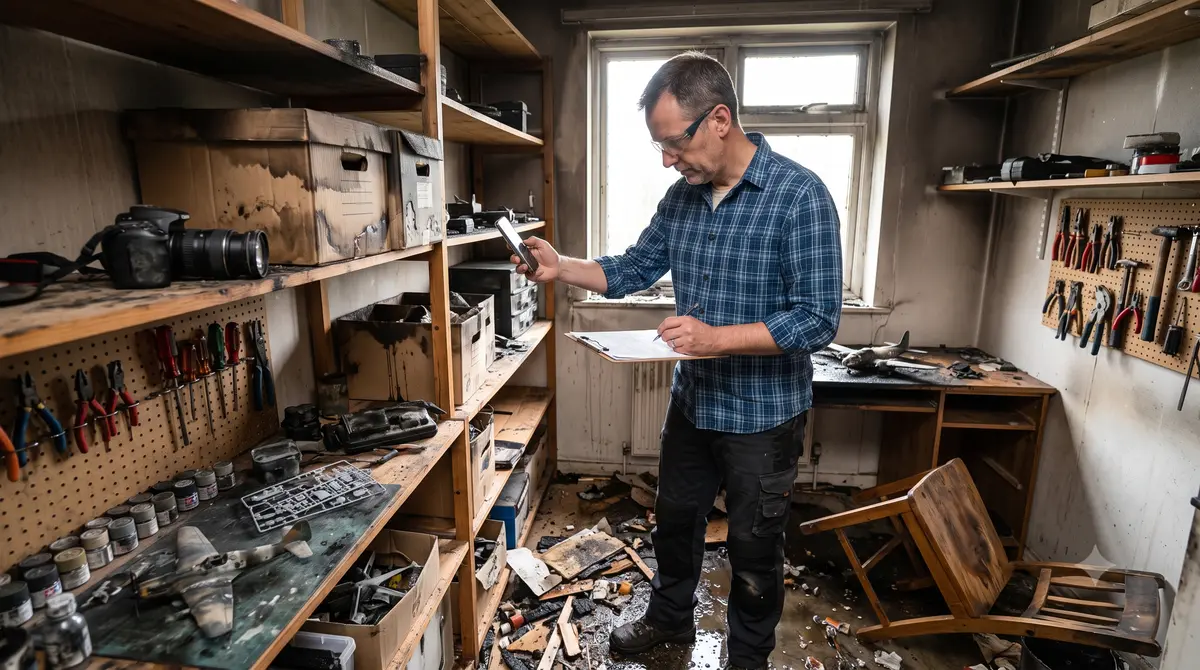
Walking into a hobby room after a fire can be overwhelming. The room may hold years of collected tools, equipment, unfinished projects, keepsakes, and hard-to-replace pieces. You may also be dealing with soot, standing water, strong odors, and pressure to start cleaning right away.
Take a breath. You don’t have to remember everything at once.
You can use the fire-damaged hobby room claim checklist below to build a clear record, one step at a time. It won’t decide whether an item is covered, but it can help you organize the photos, reports, receipts, appraisals, and estimates your insurer may ask to review.
Fire-Damaged Hobby Room Claim Checklist

Before Cleanup
Don’t go into the room until the fire department, property manager, building official, or another authorized professional has confirmed that entry is allowed. Even if the fire is out, shelving may be unstable, flooring may be slippery, and debris may still fall or shift.
Once you’re allowed inside, resist the urge to tidy up. The room’s untouched condition may be important to the claim record.
Start here:
-
Confirm who authorized access.
-
Note the date and time you entered.
-
Take a slow video from the doorway.
-
Photograph the room before moving anything.
-
Leave drawers, cabinets, boxes, and covered items in place until their original positions are documented.
-
Ask the insurer whether they have specific photo or inventory requirements.
Important: Do not throw away damaged hobby gear before asking your insurer what documentation they need.
You may eventually need to move items to prevent further deterioration or allow restoration work to begin. Before that happens, make sure you’ve captured where the items were and what the surrounding area looked like.
During Documentation
Begin with wide shots. Stand at the entrance and photograph the whole room, then take pictures from each corner. Include the walls, floor, ceiling, shelving, work surfaces, cabinets, windows, and storage areas. These images give context to the close-ups you’ll take later.
Next, work through the room in a simple pattern—left to right, shelf by shelf, or section by section. Consistency helps when you’re tired or distracted.
For each item:
-
Take one photo of the entire item.
-
Photograph the damage from more than one angle.
-
Capture the brand, model, serial number, edition number, or maker’s mark.
-
Show where the item was stored.
-
Give it a reference number that matches your inventory.
As you work through this fire-damaged hobby room claim checklist, don’t focus only on things that look burned. Fire-related loss can appear in several different ways.
Smoke damage may show up as soot, oily residue, discoloration, staining, or a strong odor. It can settle inside tool cases, drawers, camera bags, cabinets, display boxes, fabric bins, and equipment vents. When you’re allowed to open a container, photograph the outside first and then the inside.
Heat damage isn’t always obvious from across the room. Look closely for warped cases, melted plastic, cracked finishes, curled paper, separated glue, distorted metal, cloudy screens, or damaged protective coatings. Take a full-item photo before the close-up so the detail doesn’t lose its context.
Water-from-firefighting damage can affect items that never came into contact with flames. Wet packaging, swollen wood, rust, stained fabric, moisture inside drawers, and water beneath electronic equipment should all be documented. Photograph visible water lines and damp storage materials before they’re moved.
Keep descriptions factual. “Black residue on the camera body and inside the case” is more useful than guessing about what caused the damage or whether the item can be repaired.
Item Inventory
The inventory is where the room starts to feel manageable again. Don’t try to recreate everything from memory in one sitting. Use your photographs, old room pictures, purchase records, online accounts, and hobby-related documents to fill in the gaps.
Create one entry for each item or clearly defined set. Include:
-
Item name and category
-
Brand or manufacturer
-
Model and serial number
-
Approximate purchase date
-
Original purchase price, if known
-
Condition before the fire
-
Visible smoke, heat, or water damage
-
Location in the room
-
Photo reference number
-
Receipt, appraisal, or other proof of ownership
-
Repair or replacement estimate
-
Notes about accessories, parts, cases, or attachments
Small items count too. A hobby room may contain hand tools, blades, batteries, chargers, memory cards, specialty paper, paints, fabric, fasteners, display stands, protective cases, books, patterns, spare parts, and half-finished projects. They’re easy to overlook because no single piece seems significant, but together they may represent a substantial part of the room.
For collections, go piece by piece when possible. Record edition numbers, grading details, artist or maker information, certificates, and earlier appraisals. If there are too many items to finish in one session, divide the collection into groups and mark where you stopped.
Receipts are helpful, but they aren’t the only supporting records you may have. Search for emailed invoices, retailer order histories, credit card statements, warranty registrations, repair bills, product manuals, competition records, and old photographs.
For rare, vintage, custom-made, or collectible items, include any professional appraisal you already have and note its date. Don’t present an older appraisal as a current valuation without making the date clear.
When the inventory is large, keeping a printed or digital copy of the fire-damaged hobby room claim checklist beside you can help prevent missed shelves, cabinets, drawers, and storage bins.
Reports and Estimates
Ask for the available fire report or incident report. The document’s name may vary depending on the department or jurisdiction. Save the full report, including any attachments or supplemental pages you receive.
You may also receive records from a landlord, property manager, restoration company, contractor, storage provider, or repair technician. Keep them in the same claim folder, but label each document clearly so it’s obvious who created it.
Related Posts

For equipment that may be repairable, request a written repair estimate. Ideally, it should identify the item, describe the observed damage, outline the proposed work, and list labor, parts, fees, taxes, and shipping where relevant.
For items that may need replacement, gather current pricing for a reasonably comparable product. If the original model is discontinued, note that and explain why the proposed alternative is similar in function, quality, or specifications. Avoid using an upgraded model without making the difference clear.
Match every estimate to the correct inventory entry. A simple coding system works well:
-
PHO-001for photography gear -
MOD-001for models or collectibles -
TOOL-001for tools -
FURN-001for furniture or storage
Use the same code on the photograph filename, inventory line, receipt, appraisal, and estimate. That small step can save a lot of confusion later.
Someone unfamiliar with the room should be able to follow the fire-damaged hobby room claim checklist and connect each item with its photographs, ownership records, and estimates without having to guess.
Communication Records
Claims often involve more conversations than people expect. There may be calls, emails, inspection appointments, document requests, and follow-up questions. Write them down as they happen. Don’t rely on memory, especially during a stressful week.
Your communication log can be simple:
-
Date and time
-
Name of the person
-
Company or department
-
Phone number or email address
-
Claim number
-
What was discussed
-
Documents requested or submitted
-
Deadlines mentioned
-
Inspection dates
-
Agreed next steps
-
Questions still open
After an important phone call, send a short email confirming your understanding. Keep it neutral and specific.
For example:
Thank you for speaking with me today. My understanding is that you would like the room photographs, item inventory, and available repair estimates before the next review.
Save copies of everything you submit. Clear filenames make the record easier to follow:
-
Hobby-Room-Overview-01.jpg -
TOOL-014-Serial-Number.jpg -
TOOL-014-Repair-Estimate.pdf -
Fire-Incident-Report.pdf -
Hobby-Room-Inventory-Version-2.xlsx
Also note how each document was sent—email, claim portal, postal mail, or in person. If you receive a confirmation number or automated receipt, save that too.
Follow-Up Review
Before sending the completed claim package, step away for a little while if you can. Then come back and review it as though you’ve never seen the room.
Can you tell what each item is? Can you match it to a photograph? Is the damage visible? Are receipts and appraisals connected to the right inventory entries? Are the fire report and estimates readable? Have you clearly marked anything that’s still unknown?
Pay particular attention to storage areas. Items behind a fallen shelf, inside a closed cabinet, or beneath wet packaging can be missed during the first visit. Return only when access is still authorized, and add newly discovered property with the date it was documented.
Run through the fire-damaged hobby room claim checklist once more before an inspection, document submission, or follow-up call. Look for missing photos, unreadable serial numbers, duplicate entries, outdated estimates, and unanswered requests from the insurer.
Keep the original files unchanged. If you crop a photograph, add labels, or combine documents into a PDF, save the edited version separately.
A straightforward folder structure can help:
-
Fire or Incident Report
-
Room Overview Photos
-
Item Close-Ups
-
Inventory
-
Receipts and Appraisals
-
Repair and Replacement Estimates
-
Insurer Communication
-
Submitted Documents
-
Follow-Up Notes
There’s no need to make the claim sound worse than it is. Clear, honest documentation is stronger than dramatic wording. Describe what you can see, attach what you can verify, and mark information as unknown when you don’t have it yet.
A hobby room is rarely just a room full of objects. It’s often years of work, learning, collecting, and personal history. Taking the process one shelf and one item at a time won’t make the loss easy, but it can make the documentation feel possible.
If you no longer have receipts for your specialized tools or collectibles, you can read our guide on establishing proof of ownership for insurance claims.
To help protect your specialized items before an emergency occurs, you can learn how to create a home inventory for unusual belongings. Relevant Documentation: aquarium water damage to downstairs neighbor