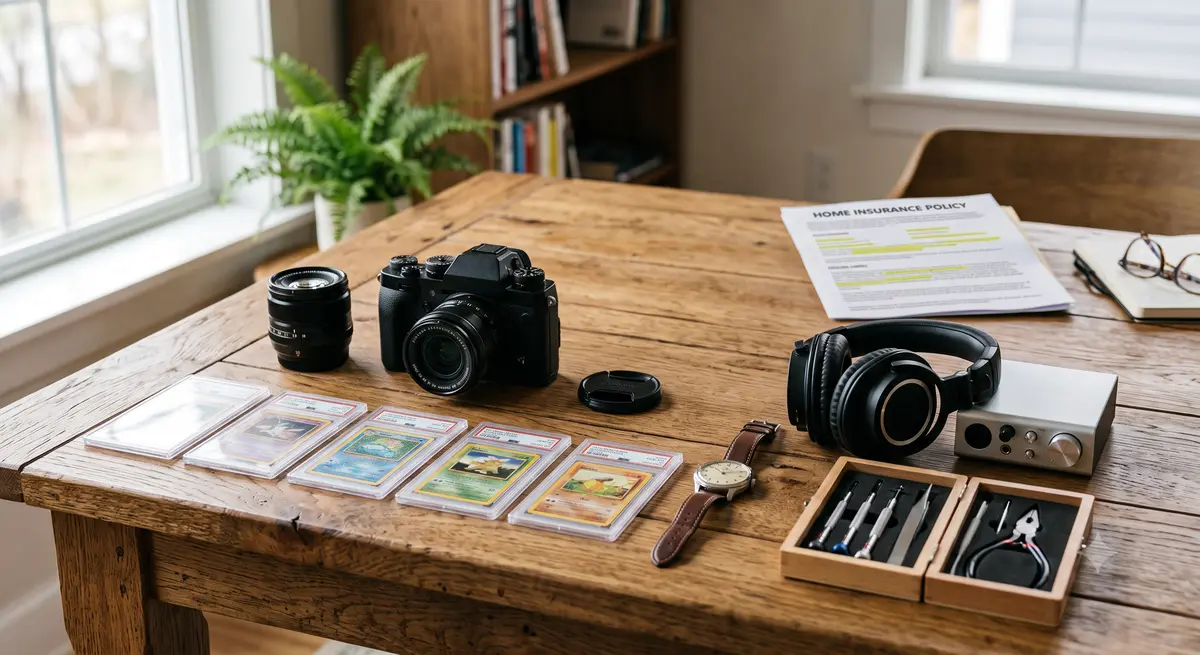
A policy can show a generous personal property limit and still leave certain hobby items subject to much smaller caps. That is the practical reason to understand how insurance sublimits affect hobby equipment claims before a camera kit disappears, a collection is damaged, or valuable tools are stolen. The total contents limit matters, but it is not always the number that controls the final payment.
What Is an Insurance Sublimit?
A sublimit is a smaller coverage cap inside a broader policy limit. It can apply to a category of property, a particular cause of loss, or belongings kept away from the insured location.
Picture the personal property limit as a large storage cabinet. A sublimit is a locked drawer inside it. The cabinet still has plenty of space, but anything classified in that drawer is restricted by the drawer’s own capacity.
This kind of limit is often listed under wording such as “special limits of liability.” The Insurance Information Institute explains that standard homeowners coverage can include valuable belongings while placing narrower limits on categories such as jewelry and other high-value property. The NAIC also advises owners to review standard limits for items including electronics, art, jewelry, and sporting equipment. Read the Triple-I overview and the NAIC guidance on valuable items.
A sublimit is generally part of the main limit, not an extra amount added on top. So even when the overall contents limit looks more than adequate, the smaller category cap can still determine how much is available for a specific part of the claim.
How Sublimits Impact Specific Hobby Gear Categories

The difficult part is not spotting the largest number on the declarations page. It is working out how the policy classifies what you own.
Jewelry and Wearable Collectibles
Watches, inherited pieces, collectible jewelry, and precious-metal items often sit in a special property category. A hobbyist might think of a vintage watch as part of a collection, while the policy classifies it as jewelry or a watch. That distinction matters because the policy category—not the owner’s label—drives the applicable restriction.
The same point applies when several items are lost together. A category cap can apply to the combined loss rather than giving each piece its own separate allowance. Check whether the wording applies per item, per occurrence, or to the category as a whole.
Electronics, Cameras, and Audio Gear
Electronics-heavy hobbies can accumulate value quietly. One camera body becomes two; a basic lens kit grows into three lenses, flashes, batteries, filters, and lighting equipment. A home studio develops in much the same way, with microphones, monitors, an audio interface, controllers, headphones, and cables purchased over several years.
Consider a photographer traveling with two camera bodies, three lenses, and a flash kit. The bag is stolen while the photographer is away from home. The claim is not governed by one question alone. The insurer will look at the electronics classification, the theft wording, the off-premises provisions, and any conditions connected with where and how the bag was stored.
That is why a general “personal property is covered” statement is not enough. You need to know which section of the policy responds to the gear you actually carry and use.
Collectibles
Trading cards, rare coins, signed memorabilia, vintage toys, limited-edition figures, and similar collections create another issue: the value sits across many separate objects. No single item has to look exceptional for the combined collection to become significant.
Here is a more realistic example. A collector keeps graded cards, signed sports memorabilia, and a vintage watch in the same room. A covered loss damages everything at once. Although the items were stored together, the policy could place them in different categories. The claim might therefore involve more than one sublimit, separate proof requirements, and different valuation questions.
Collections also change over time. New pieces are added, market interest shifts, and older purchase records get harder to find. An annual review is far easier than rebuilding the history of a collection after a loss.
Tools and Specialized Equipment
Tools used for woodworking, model building, automotive projects, electronics repair, or other hands-on hobbies can fall under ordinary personal property. The position can change when the same equipment is also used for paid work.
Do not rely on how often you earn money with the tools. Ask how the policy defines business property, professional use, and equipment kept at another location. A small amount of paid activity can still affect classification depending on the wording.
Theft Sublimits Can Change the Result
A policy can cover an item for one type of loss while applying a tighter cap when theft causes the loss. This is easy to overlook because the declarations page rarely tells the whole story.
Suppose a display cabinet containing collectible watches and rare coins is stolen during a break-in. The event is a single theft, but the policy might treat the watches and coins as separate special categories. Theft-specific restrictions could then reduce the amount available for each group, even though the overall personal property limit remains largely unused.
Read the category wording and the cause-of-loss wording together. Look for sections titled “Special Limits,” “Special Limits of Liability,” or similar language. The key question is not simply, “Is theft covered?” It is, “What is the maximum payable amount for this type of property when theft is the cause?”
Off-Premises Limits: What Happens When Gear Leaves Home?

Hobby equipment rarely stays in one place. Cameras go to events, instruments travel to rehearsals, tools move between workshops, and gaming or audio gear can end up in a hotel, studio, vehicle, locker, or storage unit.
Related Posts
Off-premises coverage can protect belongings outside the home, but the scope and cap depend on the policy. Triple-I explains that renters coverage commonly includes belongings away from the residence, while its homeowners guidance also describes off-premises protection for personal property. Review the Triple-I renters insurance guide and its homeowners insurance basics for the general principle.
Location-specific conditions still matter. Coverage can differ for property in temporary storage, a regularly used studio, a vehicle, or another residence. Theft from an unattended place can also trigger separate wording. Portable gear deserves a review before a trip, exhibition, competition, rehearsal, or workshop—not after something disappears.
How the Claim Cap Works
A covered loss does not automatically unlock the full personal property limit. The insurer first determines whether the event and the item fall within coverage. It then considers the policy’s settlement method, deductible, documentation requirements, and every relevant limit.
In practical terms, the payable amount is constrained by the applicable cap. Depending on the claim, that could be:
-
The supported amount of the covered loss
-
The amount produced by the policy’s valuation method
-
A category sublimit
-
A theft-specific cap
-
An off-premises limit
-
The unused portion of the overall personal property limit
The smallest controlling limit can become the ceiling for that portion of the claim. Unused coverage elsewhere in the policy does not automatically spill over and fill the gap.
Valuation is a separate issue. Actual cash value and replacement cost do not calculate losses in the same way, as the NAIC’s explanation of ACV and replacement cost coverage makes clear. A well-documented claim can still be reduced by the settlement method, a deductible, and a relevant sublimit.
Policy Areas to Review Before a Loss
| Policy Area | Possible Sublimit Issue | What to Ask |
|---|---|---|
| Personal property coverage | The headline limit does not necessarily apply equally to every category | Which hobby items have special limits within the main contents limit? |
| Jewelry and watches | A category or theft restriction can apply | Are vintage watches and wearable collectibles treated as jewelry? |
| Electronics | Portable or specialized devices can be subject to separate wording | How are cameras, computers, gaming systems, drones, and audio devices classified? |
| Collectibles | One cap can apply to the combined collection | Is the restriction per item, per category, or per occurrence? |
| Tools and equipment | Paid use can change the property classification | Does occasional commercial use affect coverage? |
| Theft coverage | Theft can trigger a narrower cap than another covered event | Is there a separate maximum for theft of this property type? |
| Off-premises coverage | Gear away from home can face a different limit or conditions | What applies in a vehicle, hotel, studio, locker, or storage location? |
| Claim settlement | Depreciation and proof requirements can reduce payment | Does the policy use replacement cost, actual cash value, agreed value, or another method? |
| Scheduled property or endorsement | Standard category caps can sometimes be replaced or expanded | Can specific items be listed, and what records are required? |
Documentation Helps, but It Does Not Override the Policy
Receipts, photographs, serial numbers, model details, appraisals, and a current inventory make it easier to show what you owned and what was lost. This matters most for equipment assembled from separate components, secondhand purchases, inherited pieces, and collections built over many years.
The NAIC’s home inventory guidance recommends keeping a record of belongings, including photographs and identifying details. Good records support the claim, but they do not expand the contract. Proving that a collection is worth more than the relevant cap does not remove that cap.
Keep copies somewhere other than the room where the equipment is stored. A perfect inventory saved only on a stolen laptop is not especially useful.
When Additional Coverage Is Worth Discussing
Standard personal property coverage can be enough for many hobbyists. The warning sign is a mismatch between what the policy allows and what the collection or equipment is actually worth.
Depending on the insurer and policy, the available solution could be an endorsement, a rider, scheduled personal property coverage, a floater, or separate specialist coverage. Triple-I describes floaters and scheduled coverage as ways to protect valuables beyond the narrower treatment found in a standard policy. The option is worth discussing when category caps, theft restrictions, or off-premises terms do not fit the way the equipment is owned and used.
Do not look only at the higher cap. Compare covered events, valuation terms, deductibles, territorial scope, documentation rules, and whether every item must be listed. Broader wording can matter just as much as a larger limit.
Check Before the Loss
Pull out the policy while the gear is safe, not while you are trying to remember serial numbers after a break-in. Start with one shelf, one equipment case, or one hobby category and follow it through the wording.
These questions usually expose the gaps quickly:
-
Which property category does each item fall into?
-
Is the limit per item, per category, or per occurrence?
-
Does theft trigger a different restriction?
-
What changes when the gear is away from home?
-
Does occasional paid use affect the classification?
-
How will the insurer value the items at claim time?
-
Would scheduling specific items change the cap or settlement terms?
You do not need to treat every hobby purchase like an insurance project. A simple inventory and a focused policy review are often enough to show where the real pressure points are. Check before the loss, ask for unclear answers in writing, and make coverage decisions while you still have choices.
To protect items that exceed these standard limits, you may need to add a rider or endorsement for high-value personal property to your policy.
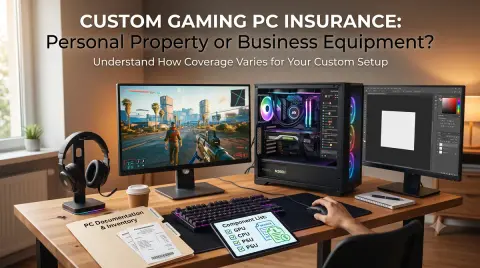
For those with high-value tech setups, it is also important to understand how your policy classifies specialized electronics; read our guide on custom gaming PC insurance to see how these coverage limits apply.
Related Reference: To explore specific valuation and documentation strategies, see hobby become business use for home insurance.