Documenting a custom mechanical keyboard collection for insurance requires establishing verifiable proof of ownership, precise component costs, and transaction histories for group buys and artisan keycaps. Because standard homeowners or renters policies often treat undocumented electronics as bulk low-value items, collectors must compile structured parts lists, high-resolution build photos, and digital receipt archives to secure accurate replacement cost coverage.
The Bulk Inventory Problem and Coverage Realities
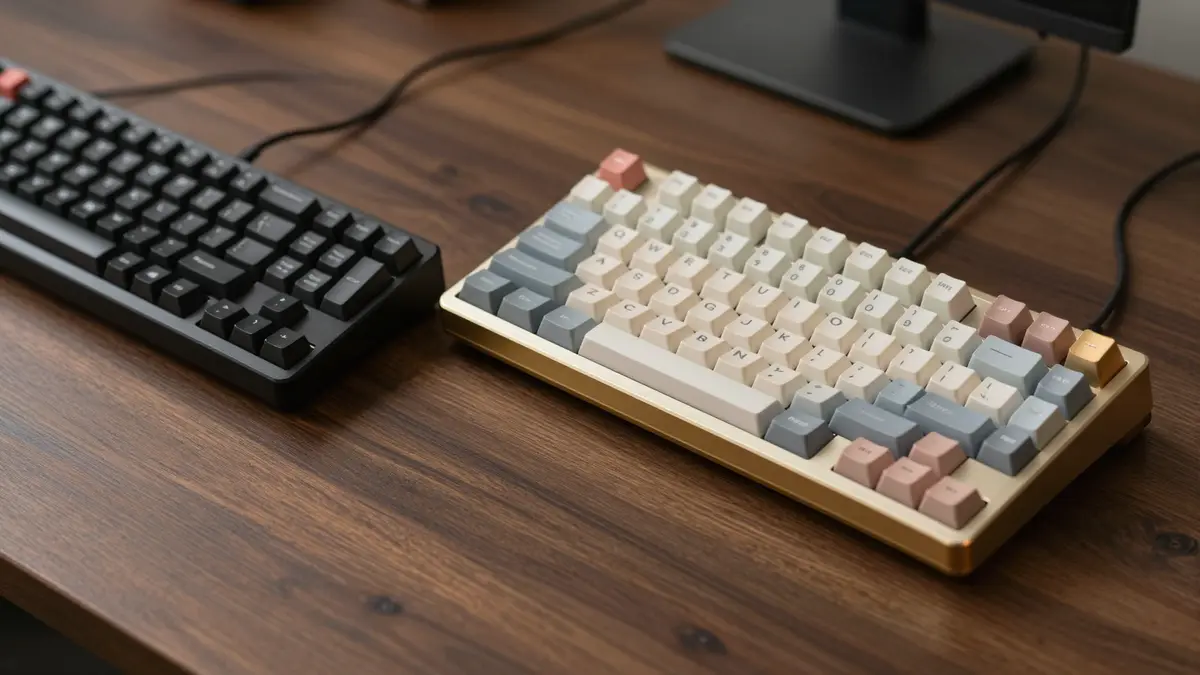
Standard homeowners (HO-3, HO-5) and renters (HO-4) insurance policies generally cover personal property under "Coverage C." However, claims adjusters who are unfamiliar with niche hobbies often struggle to distinguish between a mass-produced membrane keyboard and a custom-machined aluminum keyboard featuring aftermarket switches and limited-run keycaps. Without explicit documentation, a multi-hundred-dollar custom build may be categorized as a standard computer peripheral, resulting in a valuation that fails to cover the actual cost of replacement.
Furthermore, custom keyboards are highly susceptible to specific perils such as theft, fire, and water damage (e.g., pipe bursts or localized flooding). Because many components are acquired through group buys—where items are manufactured to order and may not be available for retail purchase again—proving the historical cost and current market value is critical. Depending on your policy's terms, personal property may be settled on an Actual Cash Value (ACV) basis, which factors in depreciation, or a Replacement Cost Value (RCV) basis, which covers the cost to purchase a similar item today. Understanding how your carrier handles these valuations is essential before a loss occurs.
Hypothetical educational scenario (Actual thresholds, sublimits, and deductibles vary by carrier, state, and policy form):
Consider a custom keyboard collection valued at $4,500, consisting of three custom builds and several artisan keycaps. If the collection is stolen and the policyholder has a standard renters policy with a $500 deductible and an Actual Cash Value (ACV) settlement provision, the claims process will differ dramatically based on documentation:
- Scenario A (Undocumented): The adjuster receives a claim for "three computer keyboards." Lacking specific parts lists or receipts, the adjuster applies standard depreciation for generic computer input devices. The collection is valued at a flat rate of $50 per keyboard. After applying the $500 deductible, the policyholder receives $0.
- Scenario B (Fully Documented): The policyholder presents a structured inventory including group buy invoices, itemized parts lists, and high-resolution photos. The adjuster verifies the custom nature of the items. Under ACV, the adjuster applies a modest depreciation rate to the custom components, valuing the collection at $3,800. After subtracting the $500 deductible, the policyholder receives a payout of $3,300.
Step-by-Step Documentation Protocol
To protect your collection against potential disputes during a claim, follow this structured documentation protocol. This process aligns with standard home inventory recommendations established by the Insurance Information Institute (Triple-I) [SOURCE ID: III-01].
- Compile a Granular Parts List: Create a spreadsheet that details every individual component of each build. For custom mechanical keyboards, a single asset is actually an assembly of multiple parts. Your inventory must list the manufacturer, model, and purchase price for the case, printed circuit board (PCB), plate, switches, stabilizers, and keycap set.
- Capture Standardized Custom Build Photos: Take clear, well-lit photographs of each keyboard. Capture the exterior from multiple angles (top-down, side profile, and bottom showing any weight inserts or engraving). Additionally, take "internal" photos during the build process or remove a few keycaps to show the switches and stabilizers underneath. This serves as physical proof that the documented components are actually installed in the case.
- Archive Group Buy Invoices and Email Confirmations: Because group buys operate on pre-orders that can take months or years to fulfill, traditional retail receipts are rarely issued. Save PDF copies of your original order confirmation emails, PayPal transaction receipts, and platform invoices (e.g., Shopify, custom storefronts). Ensure these documents display the transaction date, order number, shipping address, and itemized pricing.
- Document Artisan Keycaps and Limited Runs: Artisan keycaps require individual attention due to their low production numbers and high secondary market volatility. Document the maker, the sculpt name, the colorway, and the raffle win confirmation or aftermarket invoice. If the artisan keycap came with a physical authenticity card or unique packaging, photograph these items alongside the keycap.
- Establish Secure Digital Cloud Storage: Store all spreadsheets, photographs, and PDF receipts in a secure, cloud-based environment. According to the Insurance Information Institute, maintaining digital backups off-site ensures that your records remain fully accessible even if your physical home and local storage devices are compromised by fire, water, or theft [SOURCE ID: III-01].
- Address Data Security and Media Sanitization: Many modern custom keyboards utilize programmable microcontrollers (such as ATmega32U4 or RP2040 chips) running open-source firmware (QMK, VIA, or VIAL). These microcontrollers may store custom macros, layout profiles, or sensitive keystroke sequences. If a keyboard is severely damaged by fire or water and must be disposed of or surrendered to the insurance carrier as salvage, consider the security of the onboard storage. If the device is still partially functional, perform a cryptographic erasure or factory reset of the EEPROM/flash memory. If the device is non-functional and contains highly sensitive macro data, physical destruction of the microcontroller chip may be warranted to prevent unauthorized data recovery, in accordance with media sanitization standards such as NIST SP 800-88 Rev. 1 [SOURCE ID: NIST-01]. Keep a log of any sanitization actions taken on programmable hardware submitted for claims.
Common Documentation Gaps and Solutions
The table below outlines common documentation errors that collectors make, the resulting impact on insurance claims, and the recommended technical solutions.
Related Posts
| Documentation Gap (Symptom) | Insurance Claim Impact (Root Cause) | Recommended Documentation Solution |
|---|---|---|
| Missing Group Buy Receipts: Only secondary market forum messages (e.g., Reddit, Discord) exist as proof of purchase. | The adjuster may reject the valuation as unverified or speculative, defaulting to the original retail price rather than what you paid. | Export PayPal or bank transaction statements showing the actual funds transferred, cross-referenced with archived screenshots of the completed private transaction. |
| Undocumented Modifications: Custom lubing, filming, or spring-swapping switches is not recorded. | The labor and material costs of modifications (which can double the value of switches) are completely ignored in the valuation. | Keep receipts for lubricants, switch films, and replacement springs. Document the modification process in your parts list with estimated labor hours. |
| No Proof of Possession: Receipts exist, but there are no photos of the completed build in the home. | The carrier may suspect the items were sold, gifted, or never actually assembled, leading to potential claim denial. | Take annual "state of the collection" photos showing all keyboards together, preferably with a handwritten note displaying the current date and your name. |
| Unsecured Local Backups: Inventory spreadsheets and photos are stored only on a local hard drive. | A catastrophic event like a house fire or water main break destroys both the keyboard collection and the computer containing the records. | Implement a 3-2-1 backup strategy, ensuring at least one copy of your inventory is stored in a secure cloud repository [SOURCE ID: III-01]. |
Actionable Collection Inventory Checklist
Immediate Action Items for Collectors
Use this checklist to audit your current documentation readiness before contacting your insurance representative:
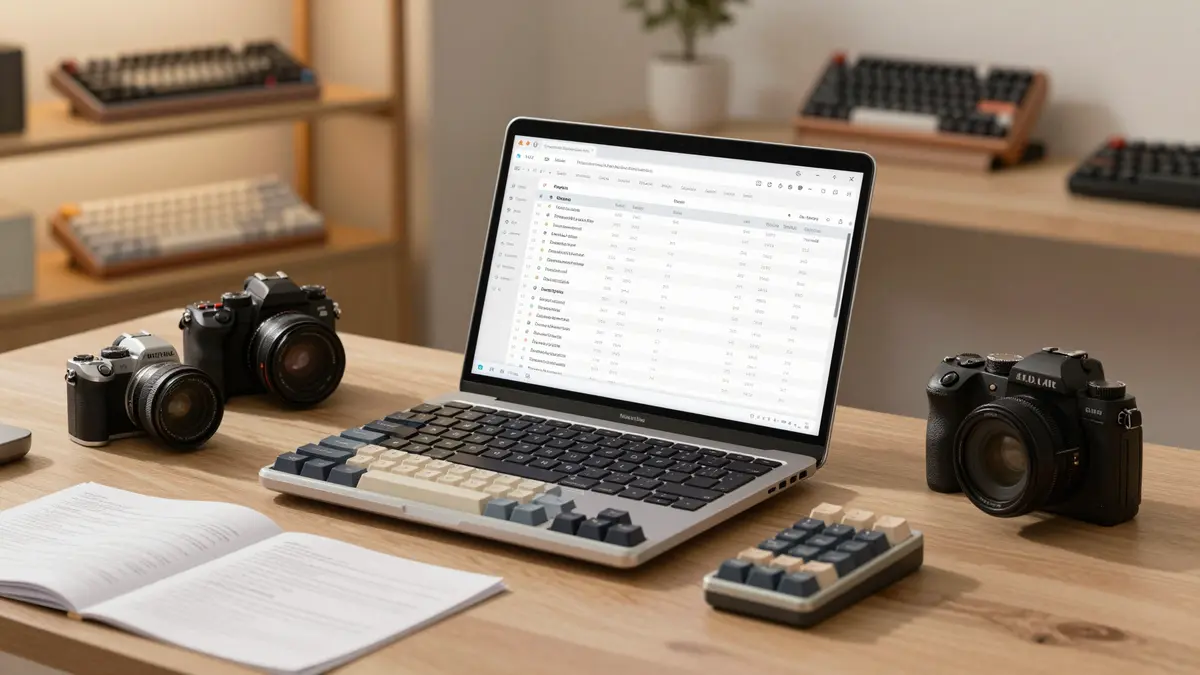
- [ ] Inventory Spreadsheet: Created a dedicated sheet listing Case, PCB, Plate, Switches, Stabilizers, Keycaps, and Artisans for every build.
- [ ] Financial Records: Gathered and converted all group buy confirmation emails, Shopify invoices, and PayPal receipts into PDF format.
- [ ] Photographic Evidence: Captured high-resolution photos of the top, bottom, and internal components of each keyboard.
- [ ] Cloud Backup: Uploaded all PDFs, spreadsheets, and images to a secure cloud storage provider [SOURCE ID: III-01].
- [ ] Policy Review: Contacted your insurance agent to verify if your personal property coverage is Replacement Cost Value (RCV) or Actual Cash Value (ACV).
- [ ] Scheduled Personal Property: Inquired whether a scheduled personal property endorsement (rider) is required for high-value, limited-run items that exceed standard unscheduled personal property sublimits.
Preventative Advice and Long-Term Maintenance
To ensure your documentation remains effective over time, establish a routine for updating your records. The custom keyboard market moves quickly, with new group buys, aftermarket trades, and custom builds occurring regularly. An outdated inventory can lead to significant coverage gaps if a loss occurs after you have acquired new high-value items.
Establish an "Inflow/Outflow" Log
Whenever you participate in a new group buy, immediately create a folder in your cloud storage for that order. Save the confirmation email and payment receipt. Once the items arrive and the build is completed, update your master spreadsheet with the final parts list and take completed build photos. Conversely, if you sell a keyboard or trade components on secondary markets, update your inventory to reflect the removal of those assets to maintain an accurate valuation of your active collection.
Consider Scheduled Personal Property Endorsements
Standard homeowners and renters policies often place sublimits on certain categories of personal property, such as electronics or high-value collectibles. While a custom keyboard is technically a computer peripheral, a carrier might classify a large, highly valuable collection under a general limit. To mitigate this risk, discuss "scheduling" your collection with your insurance agent. Scheduling an item involves providing your detailed inventory and appraisals (or build cost documentation) directly to the carrier. This typically secures a agreed-value or replacement-cost coverage specifically for those items, often with a $0 deductible, protecting your investment against a wider range of perils, including accidental damage or mysterious disappearance.
Maintain Hardware Security and Sanitization Logs
If you utilize custom firmware with sensitive macros, keep a record of the microcontrollers used in your builds. In the event of a claim where damaged hardware must be surrendered, refer to established sanitization protocols to ensure your personal data is protected before the physical assets leave your possession [SOURCE ID: NIST-01]. Documenting these security steps in your claims file demonstrates a rigorous, professional approach to managing your high-value technical assets.