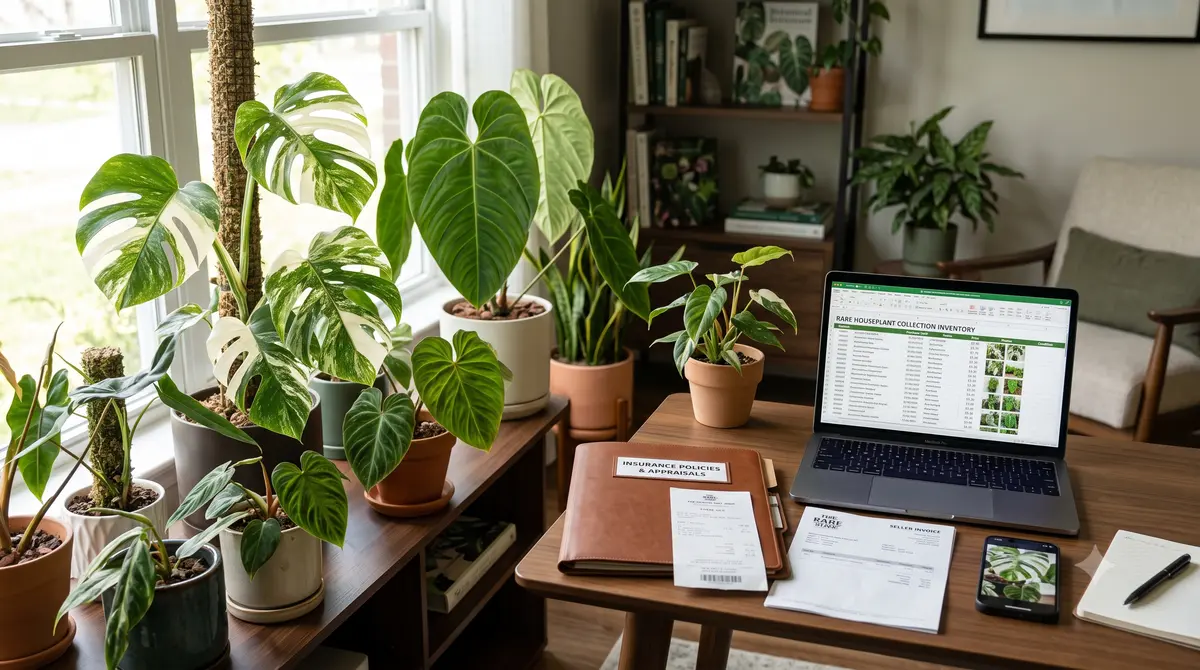
Picture a slow leak from an upstairs bathroom. By the time anyone notices, water has run down a wall, soaked a plant shelf, ruined paper receipts in a nearby drawer, and damaged several specimens that took years to grow.
The plants are right there, but proving what each one was, when it was purchased, and what evidence supports its value is suddenly much harder.
That is the practical reason to build rare houseplant collection insurance documentation before you ever need it. A useful record gives an insurer something concrete to review: purchase proof, dated photos, size and condition notes, seller correspondence, and an organized inventory that ties everything together.
Museum-level cataloging would be overkill. Practical, consistent records are what matter.
Rare Houseplant Collection Insurance: Build a Record Before You Need It
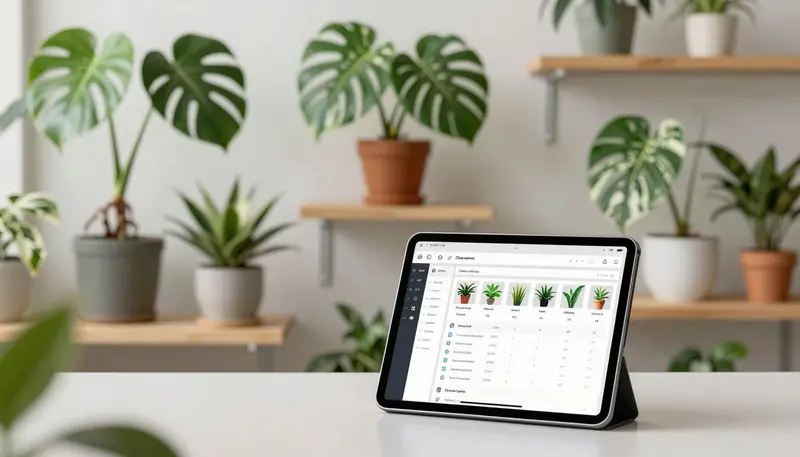
Start with the plants that would be difficult or expensive to replace. For each one, create a basic file containing the plant name, purchase date, seller, purchase price, receipt or invoice, current photos, approximate size, and a short condition note.
Keep the system boring and consistent. That is a compliment.
A collector with 12 valuable plants may only need one spreadsheet and a folder for supporting files. A collection with dozens of uncommon Anthuriums, Philodendrons, Monsteras, or mature specimens may benefit from individual inventory IDs such as PL-001, PL-002, and so on.
Use the same ID on the spreadsheet, photo folder, invoice copy, and any valuation note.
Here is a useful test: if you handed the folder to an insurance adjuster, could that person match the plant to the purchase record without calling you to decipher it?
Keep Plant Purchase Receipts
Receipts are the cleanest starting point because they connect a transaction to a date and price.
Save a digital copy even when you have the paper original. Thermal receipts fade. Handwritten receipts can become difficult to read. Paper can also disappear in the same fire or water event that damages the collection.
A clear scan or phone photo stored separately is much easier to retrieve.
If a receipt says only “houseplant,” “tropical plant,” or uses a nursery product code, add a note that identifies the specimen. For example:
PL-004 — Monstera Deliciosa Albo Variegata — purchased 14 March 2025 — receipt item #MDA-14
For online purchases, keep the order confirmation or downloadable invoice rather than relying only on a card statement. A payment record can show that money changed hands, while the seller's invoice or order details will usually provide a much clearer link to the item purchased.
Save Seller Invoices and Emails
Specialist sellers often provide more identifying detail than a generic till receipt. Keep invoices, order confirmations, payment requests, and relevant email threads that identify the plant.
An email that says “Philodendron Spiritus Sancti, established plant in 12 cm pot” tells a much clearer story than a bank charge from a nursery.
Save the original email or export it as a PDF when practical. Screenshots make useful backups, but an exported message can preserve the sender, date, subject line, and full text in one place.
For rare houseplant collection insurance records, the ideal paper trail lets another person answer four questions quickly: who sold the plant, what was sold, when it was purchased, and what you paid.
Take Photos Over Time
One photo on purchase day tells only part of the story.
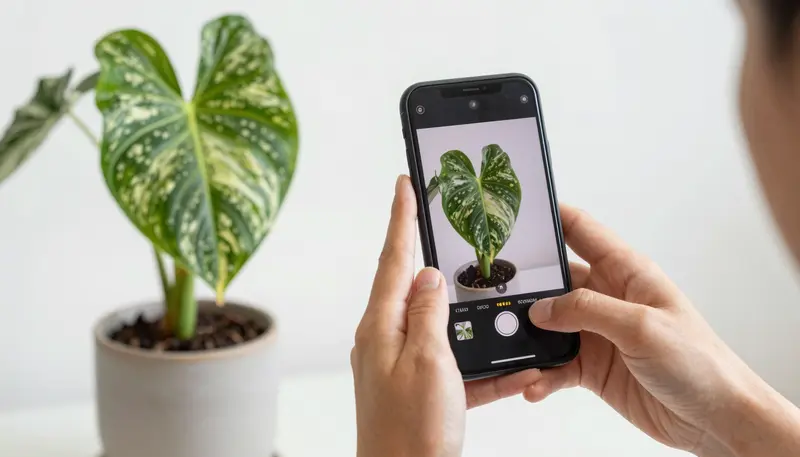
Take a full-plant photo when the specimen arrives, then add new images after meaningful changes in size or maturity. You do not need weekly updates. For a higher-value plant, a few well-spaced photographs each year can create a useful visual history without turning the hobby into paperwork.
Include at least one image that shows scale. A measuring tape, ruler, known pot size, or wider room view can help.
Photograph distinctive leaves, variegation patterns, growth points, stems, and the plant tag or inventory ID when relevant.
Consider a Monstera Deliciosa Albo Variegata purchased with three juvenile leaves. Two years later, it may be a substantial climbing specimen with much larger foliage. Simply writing the cultivar name in a spreadsheet does not document that physical change.
Keep the original image files where possible. Dated originals create a clearer chronology, while renamed copies make the collection easier to browse.
Record Plant Condition and Size
Write down details another person can understand without seeing the plant in person.
For example:
Anthurium Veitchii — approximately 62 cm from pot rim to longest leaf tip; 6 mature leaves; 17 cm pot; no visible mechanical damage; photographed 6 July 2026.
Compare that with “large, healthy plant.” The first version gives someone useful reference points.
Helpful fields may include approximate height, spread, longest leaf length, pot size, mature leaf count, and a short condition description.
Choose measurements that suit the plant. A climbing Philodendron may be better documented with vine length and leaf dimensions, while a mature Anthurium may be easier to describe through leaf count and blade size.
Update the record after substantial changes.
Nobody needs a weekly centimeter-by-centimeter growth log.
Use a Collection Spreadsheet
The spreadsheet becomes the index for everything else. One glance should tell you what evidence exists and where to find it.
A practical inventory might look like this:
| Plant Name | Purchase Proof | Photo Record | Value Note |
|---|---|---|---|
| Monstera Deliciosa Albo Variegata | Nursery invoice + card receipt | Purchase photos + 2025/2026 updates | Original purchase price documented; no independent appraisal |
| Anthurium Veitchii | Seller invoice + email | Arrival photos + dated size photos | Purchase price and current dimensions recorded |
| Philodendron Spiritus Sancti | Specialist seller invoice | Full-plant and detail photos | Seller documentation retained; valuation evidence to be confirmed with insurer |
| Anthurium Warocqueanum | Online order confirmation | Quarterly photo folder | Purchase amount recorded; current condition noted |
Add columns if they genuinely help: inventory ID, purchase date, seller, invoice number, purchase price, current location, last photo date, appraisal date, or file link.
The spreadsheet also exposes missing documentation instantly. If a plant has a substantial purchase price but the “Purchase Proof” cell is empty, you know exactly what needs attention.
For rare houseplant collection insurance, that kind of boring administrative clarity is valuable. A neat inventory cannot create insurance coverage, but it can make ownership and supporting evidence much easier to explain.
Document Value Without Turning the File Into a Price Guess
Keep the original purchase price permanently in the record. Avoid overwriting it simply because a similar plant is currently advertised online for more or less.
If you add a later value note, record where the figure came from and when you recorded it.
Two plants carrying the same cultivar name can differ considerably in physical size, maturity and condition. An advertised asking price also gives you different information from documented purchase evidence.
A restrained note can be more useful than an unsupported estimate:
Purchased for $___ on May 12, 2025. No insurer-approved appraisal on file. Current value requires confirmation.
There is no need to make the spreadsheet sound more certain than the evidence actually is.
Why Plant Appraisals Can Be Difficult
Appraisal is one of the awkward parts of documenting a living collection.
Rare plants do not fit neatly into the valuation systems commonly used for jewelry, artwork, or other traditionally scheduled valuables. A plant specialist may know an Anthurium or Philodendron exceptionally well, while an insurer may have separate requirements concerning who can provide an acceptable appraisal and what the report must contain.
Ask the insurer what it will accept before paying someone to prepare a valuation.
If an appraisal is required, find out what information should appear in it. Depending on the insurer's requirements, a useful file may include:
-
Evaluator's name and relevant qualifications.
-
Exact plant identification.
-
Date of valuation.
-
Plant size.
-
Condition.
-
Supporting photographs.
-
Valuation methodology.
-
Stated value.
Then keep the report with that plant's inventory record.
Related Posts




This is also where a term such as Scheduled Personal Property may come up. In conventional property insurance, scheduled personal property is additional coverage used for certain specifically identified high-value belongings, and related products may also be described as a personal articles floater. Whether an insurer will allow a living plant to be scheduled is a separate question and should be confirmed directly with the carrier.
Do not assume that a coverage option designed for jewelry, art, antiques, or other valuables automatically extends to a rare plant collection.
Understand Actual Cash Value vs. Replacement Cost
Another question worth asking is how a covered loss would actually be valued.
Actual Cash Value (ACV) generally accounts for depreciation when determining the value of covered property. Replacement Cost coverage generally bases settlement on the cost of replacing covered property without the same depreciation deduction, subject to the specific policy terms, limits, and loss-settlement provisions.
With living plants, the obvious follow-up gets interesting.
What counts as a comparable replacement for a specimen that has been growing for six years? What happens if a mature plant of the same size is rarely available? Would the insurer look at the original purchase amount, a comparable specimen, an appraisal, or another method?
Those are questions for the carrier rather than assumptions to build into your inventory.
Collectors may also encounter terms such as Inland Marine Policy or Personal Articles Policy while researching insurance for specialized or high-value movable property. Inland marine insurance is commonly used for certain property in transit and other specialized movable property, while personal articles policies can provide separate coverage for specified valuables. Their existence does not establish that live plants qualify for coverage, but knowing the terminology can make the conversation with an insurer much more productive.
Think Through Fire, Water, and Theft Scenarios
Put your documentation system through three unpleasant scenarios: fire, water, and theft.
Imagine a fire damages the shelving where several plants are displayed. The specimens may be destroyed along with paper receipts kept in the same room.
Now consider a serious leak. Plant labels, pots, nearby paperwork, electronics, and the plants themselves might all be affected at once.
Theft creates another problem: there may be no specimen left for an adjuster to inspect.
That is why rare houseplant collection insurance files should live somewhere other than the plant room. Keep a secure digital copy in cloud storage or another appropriately protected backup location.
Do not store the only copy of a $900 invoice in a drawer directly beneath the plant it documents.
Photos, invoices, emails, and spreadsheet entries should also point to one another. If PL-009 appears in your spreadsheet, use PL-009 in the relevant receipt filename and photo folder too.
It is a tiny habit that can eliminate a surprising amount of confusion later.
Do Not Assume Living Plants Are Covered Like Furniture
This is the part collectors need to verify directly.
Important: “Living plants may not be treated the same way as ordinary personal property. Ask your insurer before assuming coverage.”
Homeowners and renters insurance policies can contain definitions, coverage limits, exclusions, deductibles, covered-peril requirements, and loss-settlement rules that affect what is covered and how a claim is handled. Insurers may also use endorsements or separate policies to extend coverage for certain categories of valuable personal property.
None of those general insurance concepts confirms that a living plant is covered.
When discussing rare houseplant collection insurance with an agent, broker, or carrier, get specific:
-
Are living indoor plants treated as covered personal property under my policy?
-
Is there a separate limit for plants, living property, or collections?
-
Which loss scenarios are covered: fire, accidental water damage, theft, or something else?
-
Are any water-related losses excluded or limited?
-
What proof of ownership would be expected after a claim?
-
Is a receipt sufficient, or would you require an invoice, appraisal, or additional valuation evidence?
-
If a plant cannot be replaced at the same size or maturity, how would the loss be valued?
-
Would a covered loss be settled using Actual Cash Value or replacement cost?
-
Can a high-value plant or collection be scheduled through an endorsement or rider?
-
Would a personal articles floater or another specialty form ever be available for this type of property?
-
Does the carrier have written guidance that specifically addresses live plants?
Write down the answers.
Even better, ask for clarification by email where appropriate and keep that correspondence alongside the collection inventory. Memory is a poor filing system when a claim happens months or years later.
Keep Documentation Separate From Plant Care Records
Care records and insurance records serve different purposes.
Your watering log, humidity notes, substrate records, or repotting dates may be useful as a grower. The insurance folder should be much easier for an outsider to scan: identity, ownership, purchase history, size, condition, photographs, value evidence, and insurer correspondence.
A clean digital folder structure could look like this:
-
00-Collection-Inventory -
01-Purchase-Receipts -
02-Seller-Invoices -
03-Plant-Photos -
04-Valuation-Documents -
05-Insurance-Correspondence
Use the same plant ID throughout.
PL-012-Anthurium-Veitchii-Invoice.pdf
PL-012-Anthurium-Veitchii-2026-07.jpg
You can see immediately that both files belong to the same specimen.
Simple systems survive busy months. Complicated systems tend to get abandoned.
Review the Collection Once or Twice a Year
Set aside an hour once or twice a year and audit the file.
Open the spreadsheet while standing in front of the collection. Confirm that your important plants are listed. Add newer acquisitions. Update specimens that have changed substantially in size or condition, and take fresh photographs when the existing images no longer represent the plant well.
Then check the boring details.
Can you still open the cloud folder?
Are the invoices readable?
Did you save the actual seller attachment, or only a link to an old order page that may eventually disappear?
If the collection has changed materially since your last insurance conversation, it also makes sense to revisit the coverage questions. Documentation prepared when you owned six significant plants may no longer describe a collection that has grown to 30.
A Simple Documentation Checklist
For each significant plant, aim to have:
-
A consistent plant name or inventory ID.
-
Purchase date.
-
Purchase price.
-
Seller name and identifying information.
-
Receipt, invoice, or seller email.
-
Clear full-plant photographs.
-
Dated photos showing changes over time.
-
Approximate size measurements.
-
A current condition note.
-
A matching spreadsheet entry.
-
Any insurer-accepted appraisal or valuation document.
-
Relevant written insurance correspondence.
-
A backup copy stored away from the collection.
Try this test: pick any row in the spreadsheet and see whether you can locate every supporting file in under a minute.
If you can, the system is probably doing its job.
Keep the File Useful, Not Perfect
A strong documentation system is not about producing a beautiful binder. It is about having credible records available when the plant itself, the receipt, or both may no longer be there.
Start with the specimens that matter most. Give them consistent IDs, save the original paperwork, take clear dated photographs, and keep the files somewhere a household accident cannot wipe out along with the plants.
Then have the insurance conversation.
Rare houseplant collection insurance only becomes meaningful when you know how your own policy treats living plants, which loss scenarios it actually covers, and what evidence the insurer expects if you ever have to prove what was sitting on that shelf.
If you also house valuable tech equipment alongside your botanical collection, you may want to learn how standard policies handle home lab server rack insurance.